Posts

TCCA - a widely used disinfectant

Image
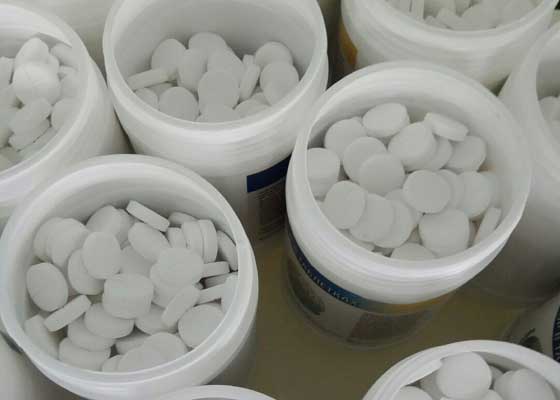
Trichloroisocyanuric acid (TCCA) is an efficient, flexible reagent for chlorination and oxidation reactions. Its correctly used to synthesize numerous instructions of compounds, which includes: Chlorinated arenes, N-chloramines and amides, α‐ halo ‐ carbonyl compounds, benzyl chlorides, esters, carboxylic anhydrides. It is typically retailed in granules, tablets, or powder forms. Due to its excessive chlorine content, sterilization nature and bleaching performance its perfect for cleansing and disinfecting purposes. It kills fungi, micro organism in addition to spores.   Properties An low priced but strong supply of chlorine. Has an extended shelf life. Stable beneathneath storage. The sterilization lasts long. Zero white turbidity. Leaves your pool crystal clear. Easy to apply and handle, which includes storage. Limited outcomes on you. Uses As said earlier, this agent has excessive stages of chlorine. It, therefore, makes Trichloroisocyanuric acid (TCCA)   have a extensive v...
Introduction of Chlorine Chemicals Used in Drinking Water Disinfection

Image
Sodium Dichloroisocyanurate   Sodium dichloroisocyanurate is a white powder or granular solid. It is the maximum broad-spectrum, high-performance and secure disinfectant amongst oxidizing disinfectants, and it's also the main product amongst chlorinated isocyanurates. SDIC disinfectant granular   can powerfully kill numerous pathogenic microorganisms which includes bacterial spores, bacterial propagules, fungi, etc. It has a selected killing impact on hepatitis viruses, quick kills and strongly inhibits blue-inexperienced algae, crimson algae in circulating water, cooling towers, swimming pools and different systems. Algae, seaweed and different algae plants. It has an intensive killing impact on sulfate-lowering micro organism, iron micro organism, and fungi withinside the circulating water device. Trichloroisocyanuric acid is a brand new technology of broad-spectrum, high-performance and low-toxicity fungicides. Trichloroisocyanuric acid 90 chemical can kill nearly all fungi...

Characteristics and Flocculation Effect of polyaluminum chloride

Image
  Polyaluminum chloride is a versatile inorganic polymer compound with a wide range of uses. It is mainly used as a flocculant in water treatment plants. Polyaluminum chloride is a polymer formed by the interaction of hydroxide ions and polyvalent anions. Large molecules and high charges. Its main properties are mainly colloidal solids, mostly colorless colloidal solids. Sometimes it becomes a transparent liquid when it dissolves, and sometimes it becomes black mucus when it contains other charges. Its solubility is average. It is easily soluble in water and also soluble in alcohol, but insoluble in absolute ethanol and glycerin. Different types of polyaluminum chloride have different dosages and coagulation effects. Therefore, a suitable flocculant must be used. In terms of morphology, it can be divided into solid and liquid. The solid is divided into brown, beige, golden and white according to different colors. The liquid can be colorless and transparent, slightly yellow, light y...

Uses and Advantages of NaDCC Disinfectants

Image
NaDCC disinfectant would be the approach to take if you are searching for a powerful, non-toxic disinfectant for water. NaDCC disinfectant tablets, also known by the technical name of sodium dichloroisocyanurate, certainly are a popular supply of chlorine for disinfection as it is an application of hypochlorous acid. The sodium salt of a chlorinated hydroxytriazine is sodium dichloroisocyanurate (SIDC), prevalently known as NaDCC disinfectant. It is popular as a free supply of chlorine to disinfect water. Owing to its high efficiency, low toxic disinfection, and broad spectrum, NaDCC powder  is considered an option to other cleaning agents like bleaching powder and sodium hypochlorite. In addition, it includes a strong impact on bacteria, viruses, and bacteria spores. It could also kill algae, improving the quality of water. NaDCC comes in powder, granular, tablet forms. The chlorine content can vary greatly slightly with respect to the form used.    Properties of NaDCC...

Introduction of Water Treatment Process in Water Supply Company

Image
1. The raw water enters the distribution well, where large and heavy suspended particles settle. The raw water is equally divided into two parts and enters the sedimentation tank through the pipeline connected with the sedimentation tank. There is an incoming turbidity detector in the water distribution well. 2. The distributed water passes through a tubular mixer before entering the sedimentation tank, where the raw water is added to the coagulant ( PAC solution , the main component AL2O3). After entering the flocculation tank, the raw water passes through 48 layers of grids, and the flow rate is further slowed down. The suspended solids and colloidal impurities contained in the raw water react with the coagulant to produce flocculent sedimentation, and part of the flocculation sediments in the flocculation tank. There is a buffer zone between the flocculation tank and the sedimentation area to stabilize the water flow and slowly enter the sedimentation area. The sedimentation area is...

Ways to Regulate Quality of Swimming Pool Water

Image
  To regulate quality of swimming pool water, a filtering system is generally not adequate. To regulate or prevent growth of organisms in swimming pool water non-professional users may treat private pools. For disinfection, appropriate balanced water chemistry must maintain an adequate active chlorine level. The active chlorine (free chlorine) disinfectant is employed to sanitize,   kill disease-causing organisms, as well as oxidize, destroy ammonia, nitrogen-containing contaminants and swimmer waste. Some details of swimming pool water disinfection Properly balanced or saturated water prevents damage to the pool and equipment. Unsaturated water corrodes plaster walls, fixtures, plumbing, etc., and causes staining.   Oversaturated water deposits scale or becomes cloudy. The operator needs to test and control Free Available Chlorine, pH, total alkalinity, TDS, & hardness to keep balanced water. Cyanuric acid can also be supplied as ingredient in stabilized chlorine gra...

Efficient disinfection performance of disinfectants containing NaDCC

Image
  Hypochlorites, the most widely used of the chlorine disinfectants, are available as liquid or solid. The most prevalent chlorine products in the United States are aqueous solutions of 5.25%–6.15% sodium hypochlorite, usually called household bleach. They have a broad spectrum of antimicrobial activity, do not leave toxic residues, are unaffected by water hardness, are inexpensive and fast acting, remove dried or fixed organisms and bio‒films from surfaces and have a low incidence of serious toxicity. Sodium hypochlorite at the concentration used in household bleach (5.25‒6.15%) can produce ocular irritation or oropharyngeal, esophageal and gastric burns. NaDCC   with  2,500 ppm available chlorine  is effective against bacteria in the presence of up to 20% plasma, compared with 10% plasma for sodium hypochlorite at 2,500 ppm. "Super oxidized water" has been tested against bacteria, mycobacteria, viruses, fungi and spores. Freshly generated super oxidized water is ra...